
Marx and Engels – Errors

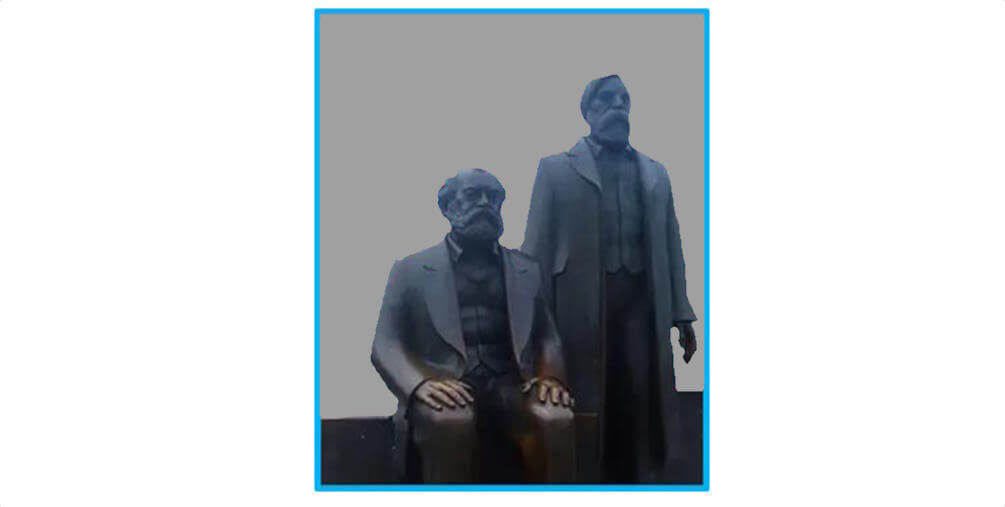
Marx and Engels – Saw the Crises
But they misread the Cycle
They recognized the human cost of industrial capitalism. Their mistake was treating a violent period of technological transformation as capitalism’s final form.
Karl Marx and Friedrich Engels wrote at one of the most unstable moments in modern European history.
Industrialization was overturning established trades, drawing families into rapidly growing cities, and placing workers under factory discipline. Economic distress deepened during the 1840s. In 1848, revolutions broke out across much of continental Europe just as Marx and Engels published The Communist Manifesto.
Their theory did not emerge from abstract speculation alone. Engels had studied working conditions in Manchester, where his father was a partner in a textile business. Marx examined political economy while moving among Paris, Brussels, and Cologne. He settled permanently in London only after the revolutions of 1848 had been defeated.1 There he conducted much of the research that eventually became Capital.
Within the Technology Cycles model, Marx and Engels were observing the social crisis surrounding the second great technological surge. They saw the destruction clearly. They did not yet see what would be built from it.
What Marx and Engels Understood
Marx and Engels recognized that industrial technology was doing more than improving production. It was reorganizing society.
Machines increased the scale of the factory. Large investments became necessary to compete. Independent producers lost ground to businesses that could combine machinery, capital, and large workforces. Workers who no longer owned the tools of production had to sell their labor to survive.
Marx and Engels also understood that markets did not automatically settle into a stable balance. Production could expand faster than purchasing power. Goods could remain unsold even while people lacked necessities. Economic growth could therefore produce instability rather than eliminate it.
They were especially perceptive about the way capitalism transforms everything around it. New production systems alter work, ownership, family life, politics, and social standing. They can create enormous wealth while destroying the institutions that previously gave people security.
Their description of capitalism as a restless and revolutionary force remains one of their most important contributions.
The Revolutionary Prediction
Marx and Engels believed that capitalism would eventually destroy itself.
Competition would force factory owners to introduce more machinery. Machinery would reduce the relative need for human labor. Ownership would become concentrated while the industrial working class became larger and more organized.
The system would therefore create the class capable of overthrowing it. As they wrote in the Communist Manifesto, the bourgeoisie produced “its own grave-diggers.” They considered the fall of capitalism and the victory of the proletariat equally inevitable.2
This was the decisive step in their reasoning. It was also where their historical interpretation began to fail.
They Mistook a Transition for a Destination
The industrial world Marx and Engels observed was real. It was also incomplete.
A great technological surge does not distribute its benefits evenly from the beginning. During its early stages, investment flows toward the new infrastructure. Old skills lose value. Established communities are disrupted. Employers possess more bargaining power than workers because the new system develops faster than the institutions capable of governing it.
The result can look like the final logic of the technology.
It is not.
As a technological surge continues, new industries form around the original innovations. Productivity improvements spread beyond the first factories. Workers acquire new skills. Political pressure produces labor protections. Rising output can support higher wages and larger consumer markets.
None of this happens automatically. It requires conflict, legislation, institutional experimentation, and time. The important point is that the brutal conditions Marx and Engels witnessed were not necessarily the permanent destination of industrial technology. They were conditions produced while a new economic system was being installed.
Marx and Engels interpreted the crisis of that installation period as evidence that capitalism had reached its terminal contradiction.
They saw the middle of the transformation and believed they were seeing the end.
The Labor Theory Problem
Marx’s economic prediction depended heavily on his theory of value.
He argued that commodities possessed value based on the socially necessary labor required to produce them. Machinery transferred its existing value into the goods it helped create, but only living labor could generate new surplus value.3
From this premise, Marx developed his theory of the falling rate of profit. As businesses replaced workers with machinery, a smaller share of capital would be spent on the labor that Marx regarded as the source of surplus value. Profit might continue to grow in absolute terms, but the rate of profit would tend to decline relative to the total capital invested.
The weakness in this argument is not simply that machinery must save more than it costs. That is normally why a business buys machinery in the first place.
The deeper problem lies in treating labor as the sole source of newly created economic value. Technology can reorganize production, open markets, improve quality, and make products possible that could not previously exist. Its economic contribution cannot always be reduced to labor transferred from one object to another.
Marx himself recognized that the rate of profit did not fall in a simple or continuous line. He identified forces that could counteract the tendency, including greater productivity and the declining cost of machinery. He therefore described the falling rate of profit as a tendency, not an automatic annual result.4
Later economic analysis has shown that productivity-enhancing technology can raise the rate of profit under plausible conditions.5 The introduction of machinery does not, by itself, establish that capitalism must approach collapse.
The Adaptability Marx Underestimated
Marx and Engels did not believe that capitalism could permanently reform itself.
Yet industrial societies gradually developed institutions that changed the relationship between workers, employers, and the state. Labor law limited some of the worst abuses. Social insurance reduced the consequences of illness and old age. Broader political participation gave workers influence that they had not possessed in the 1840s.
The economic structure also changed. Workers became important consumers of industrial output. Businesses could no longer prosper only by suppressing wages. Mass production increasingly depended on mass purchasing power.
These changes did not end exploitation, inequality, or economic crisis. They did show that capitalism could alter its institutions without abolishing markets or private ownership.
Marx and Engels treated the ownership structure as the central fact from which the rest of society followed. The history of industrial capitalism suggests a more complicated relationship. Ownership matters, but so do law, political participation, bargaining power, public administration, and the institutions that determine how the gains from technology are distributed.
Capitalism survived partly because those institutions changed.
The Missing Operating System
Marx did write about the transition to communism.6 He discussed cooperative ownership, the costs of administration, public services, distribution, and the political authority that might exist between capitalism and a mature communist society.
He did not, however, provide a practical operating system for the society that was supposed to follow.
Who would decide what should be produced?
How would competing needs be compared?
How would managers be selected and removed?
How would information travel from local workplaces to national decision-makers?
How would political authority be prevented from becoming a new form of permanent ownership?
Marx believed that changing the ownership of production would transform the relationships surrounding it. The experience of later communist states demonstrated that abolishing private ownership does not abolish hierarchy, information problems, institutional self-interest, or the concentration of power.
A factory still requires coordination after its ownership changes. An economy still requires signals that connect production with human need. A government that controls both political authority and economic resources may become more difficult to correct than the private owners it replaced.
Marx described the injustice he wanted to remove more fully than the institutions that would prevent it from returning in another form.
The Technology-Cycle Error
Marx and Engels should not be dismissed as foolish or irrelevant. They identified real suffering and important weaknesses within industrial capitalism.
Their mistake was one of historical position.
They examined capitalism during a period when a new technological system was destroying older forms of work faster than society could construct replacements. They assumed that the resulting misery revealed the permanent direction of the system.
The Technology Cycles model suggests a different interpretation.
Major technologies first disrupt the economic order that produced them. Their benefits remain concentrated while their costs spread through society. This creates a period of severe instability. Political movements form around the belief that the entire system has failed.
The eventual outcome depends on whether society can build institutions suited to the new technological structure.
Marx and Engels saw the institutional failure. They concluded that capitalism itself had to disappear.
Industrial societies instead created a mixed system in which markets continued to operate but were increasingly shaped by public institutions, democratic pressure, and social protections. That system remained imperfect, but it proved more adaptable than either nineteenth-century laissez-faire capitalism or centralized communist planning.
What Remains Valuable
Marx and Engels were wrong about the inevitability of capitalism’s collapse. They were not wrong that technological change can separate economic progress from human well-being.
They understood that a society can become more productive while leaving many of its people less secure. They understood that economic systems create political power. They also understood that severe crises are not always external accidents. They can emerge from the structure of production itself.
Those insights still matter.
The lesson is not that Marx and Engels discovered the final law of capitalism. It is that they witnessed a technology cycle in crisis and produced one of history’s most powerful interpretations of what they saw.
They diagnosed the damage accurately.
They mistook the crisis for the destination.
Sources and Further Reading
Karl Marx and Friedrich Engels, Manifesto of the Communist Party.
Karl Marx, Capital, Volume III, Chapters 13–15.
Karl Marx, Critique of the Gotha Programme.
Stanford Encyclopedia of Philosophy, “Karl Marx.”
- Louis Menand, “Karl Marx, Yesterday and Today,” The New Yorker, October 10, 2016. ↩︎
- Karl Marx and Friedrich Engels, Manifesto of the Communist Party, 1848, Chapter I. ↩︎
- Karl Marx, Capital, Volume III, Chapter 13. ↩︎
- Karl Marx, Capital, Volume III, Chapter 14. ↩︎
- John E. Roemer, Analytical Foundations of Marxian Economic Theory, Cambridge University Press. ↩︎
- Karl Marx, Critique of the Gotha Programme, 1875. ↩︎